Quick answer
Trim stems at an angle, change the water every two days, keep flowers away from direct sun and fruit bowls, and remove any leaves that sit below the waterline.
Whether you've just received a bouquet or picked one up yourself, a little bit of care in the first few days makes a real difference to how long it lasts.
None of the tips below require special equipment — just a clean vase, sharp scissors and a few minutes.
9 tips that actually extend vase life
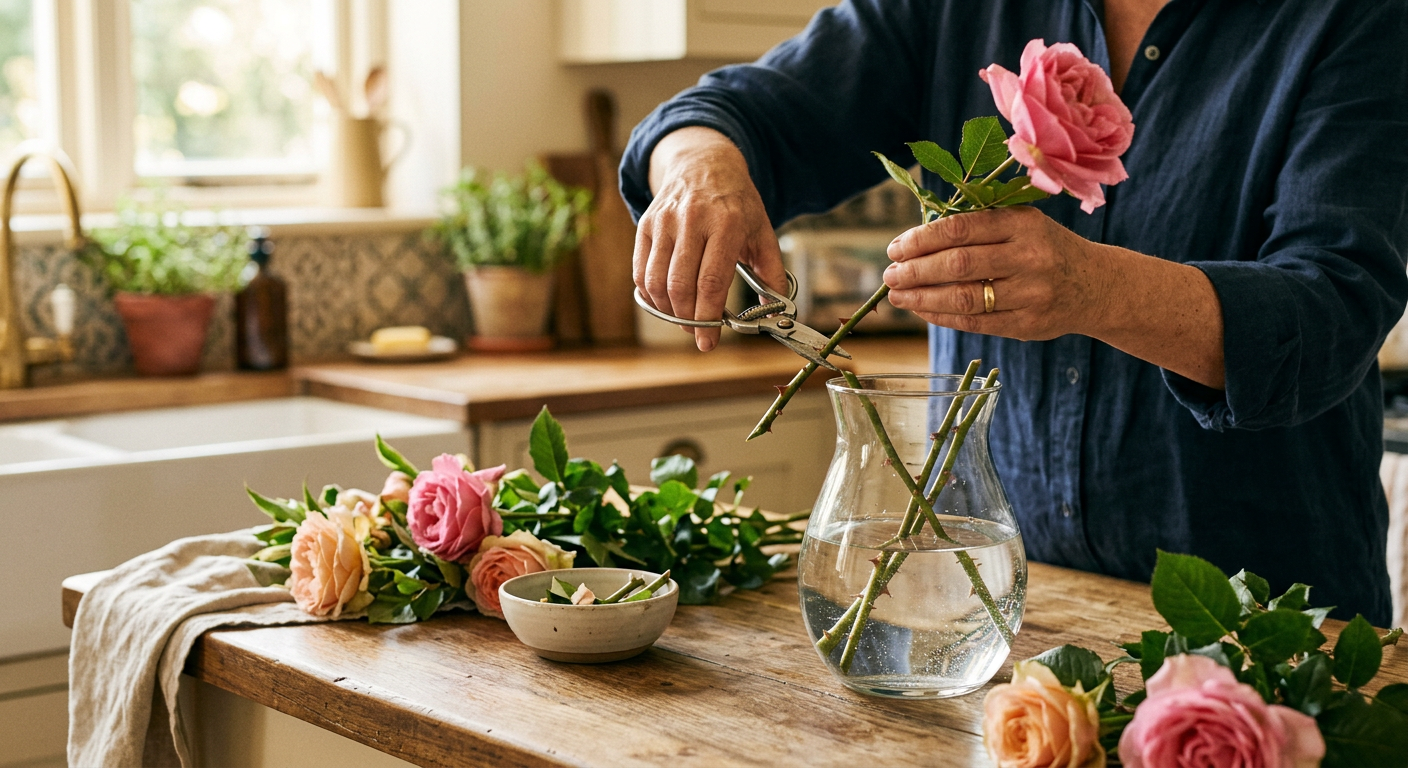
- Trim stems at a 45-degree angle before placing them in water — this increases the surface area for water absorption.
- Re-trim stems every two to three days, even by just a centimetre.
- Remove any leaves that would sit below the waterline, as submerged leaves rot and cloud the water quickly.
- Change the water every two days, even if it still looks clean.
- Use a clean vase — residue from previous flowers can harbour bacteria that shortens vase life.
- Keep the arrangement away from direct sunlight and heat sources like radiators.
- Keep flowers away from ripening fruit — fruit releases ethylene gas, which speeds up flower aging.
- Use flower food if it was provided, or a small amount of sugar and a drop of household bleach as a simple substitute.
- Move the arrangement to a cooler spot overnight if possible, such as a cooler room or even briefly in the fridge.
Flower-specific notes
Woody stems, like roses, benefit from a sharper angled cut than soft-stemmed flowers like tulips. Bulb flowers such as lilies will often open gradually over several days — removing the pollen-bearing stamens once they open can also help prevent staining on fabric or petals.
Frequently asked questions
Why do my flowers wilt faster than expected?
The most common causes are dirty vase water, stems that have not been re-trimmed, and placement near heat, direct sun or ripening fruit.
Should I use the flower food packet that comes with a bouquet?
Yes — the sachets provided with most bouquets contain a balanced mix of sugar (food for the flower) and a mild antibacterial agent, and generally outperform homemade alternatives.